Country Guide: Ireland, Scotland, and England
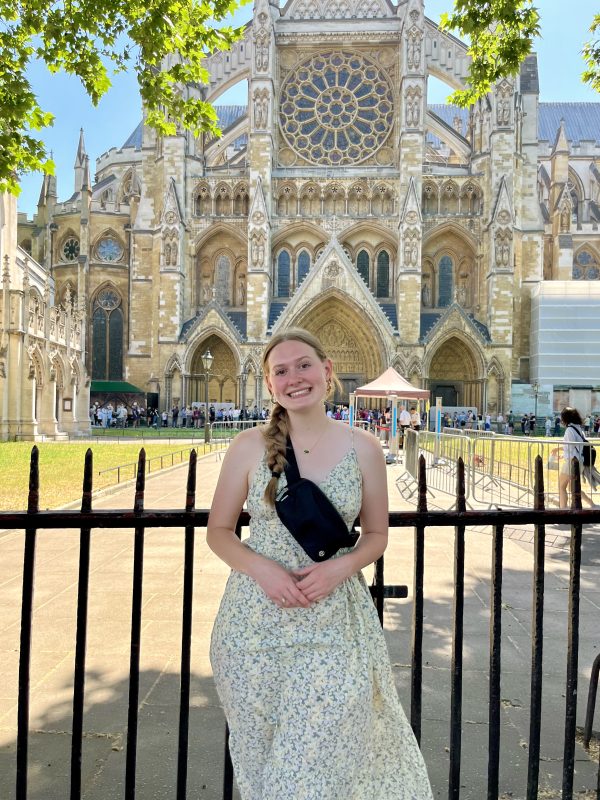
By Agnes Rodts, who studied abroad on the Ireland, Scotland, and England: From Conquest to Cooperation program in Summer 2026.

I chose to study abroad in Ireland, Scotland, and England because I like the literature and history of Ireland and the UK. I wanted to see the buildings and cultures in person. I also wanted to see the interplay of new and old architecture in comparison to what I’ve read and watched. It is definitely a different experience to see everything in person; you’re able to more clearly see the context and influences of ideas and historical events.
I studied in Dublin, Galway, Connemara, Belfast, Antrim, Edinburgh, Oxford, Bath, and London during my study abroad. Most of the cities are very old with areas that have new buildings or old exteriors with renovations on the inside. The architecture is very beautiful and makes everything seem rather magical. It’s like there’s a historical landmark every 100 ft.
Day-to-Day transportation changed, depending on the region I was in. We had bus passes for most of the cities I was in or a charter bus when we were doing more tourist-y adventures. I never had to order an Uber, it was very easy to get around by walking, hopping on a train, or a bus in all the places I was in. The public transportation cost depended on the area, a lot of places had one-day or XX-day passes you could purchase, but I’m not sure how much those were as my professor purchased those. For the transportation I did have to pay for, it was never more than $10/day!
There were some free days when we were allowed to explore on our own. I went to Antrim and visited the Giant’s Causeway, that was about $40 on TripAdvisor. I and others from my group purchased tickets together for a charter bus to take us there and give us a tour of Ireland’s countryside. It was just a day trip, so we didn’t stay overnight anywhere. Other than that, I didn’t travel to other cities, because my program itenerary already had so many places!

Foods that were very common in Ireland were fried eggs, black and white pudding, beans, mushrooms, sausage, bacon, hash browns, and soda bread (sooooo yummy!!!) Scotland and England had the same spread, but they also had haggis, lots of croissants, pastries, bread, and jams. All the places had fish and chips, but Meal Deals at the grocery stores are great if you want something less expensive. Ireland, Scotland, and England all had fantastic Asian cuisine as well!
There was no language barrier in Ireland and the UK if you speak English! Everything’s in English, the only thing that may be challenging is the accent and speed at which they talk. People in Ireland speak very quickly and have thicker accents, but you’ll be fine everywhere else. Ireland has two official languages, English and Irish, they have everything in both so it’s cool to see the dual translations!
Some differences between U.S. culture and Ireland and the UK are tax is built into the price of all items. There is no tipping culture; you never have to worry about calculating tips. What you see is what you pay for, makes it very easy to budget! Additionally, every place I went to took card. They are pretty much cashless, some places won’t even accept cash. I didn’t bring any with me and I was perfectly fine.
Everyone I met was friendly, Irish folks in particular! You can tell that the locals are very proud of their history and ancestry. All the people I met, guides, servers, etc were sweet and go above and beyond to make you comfortable or answer your questions. Going to local restaurants is a good way to experience culture. Additionally, their chain restaurants have higher food quality than fast food in the U.S.
I did not attend any cultural events while I was abroad. There were no holidays that happened during my trip. There was Mother’s Day for the U.S., but they celebrate it at a different time abroad. The only local “events” I went to was Church for Sunday Mass. It was great seeing all the churches, and I loved going in them.
This is silly, but they didn’t have washcloths in the hotels, and all the bathroom light switches were on the outside of the hotel. Another is that they don’t have water fountains, but most places have free water and will fill up your water bottle. There are also very few trash cans; it seems like you can never find a trash can when you need one. I would highly recommend dining in, instead of grab and go, because otherwise you’ll be holding onto your trash forever!

I lived in hotels throughout my time in Ireland, Scotland, and England, it was a comfortable and flexible base while traveling between cities. Staying in hotels meant I had access to private bathrooms, daily housekeeping, and basic amenities like Wi-Fi and on-site dining. I had breakfast every day at the hotel, and their breakfasts were really good, so I was never left hungry. I had one roommate, and she was part of my program.
My hotels were generally located near major city centers, which made it easy to explore each destination on foot or by public transportation. Being close to central areas meant I could reach museums, historic sites, restaurants, and transportation in less than 5 minutes. Public transportation in all three countries was efficient, so buses, trams, and trains made it simple to move between neighborhoods. This central location helped me make the most of my time in each place.

I didn’t attend a host university abroad because it was faculty-led and not an extended period of time. My learning came from visiting historical sites, museums, cultural landmarks, and guided tours. These experiences taught local history, art, and culture in ways that felt immersive and memorable. This independence allowed us to explore topics that interested us at our own pace.
The cost of living in Ireland, Scotland, and England was generally higher than in Charlotte, especially for food. Everyday items like coffee or quick meals cost more, so I had to budget carefully. I stuck to my budget by using Apply Maps to scout restaurants, not getting dessert at every meal, using public transportation, and choosing affordable activities when possible. Many museums and cultural sites offered free admission, which helped balance expenses.
While abroad, I used my phone primarily through an unlimited service plan through Verizon, which I then cancelled when I got back to the U.S. However, Wi-Fi was available in hotels, cafés, and public areas, which made staying connected easy. Apps like Google Maps, WhatsApp, and local transit apps were extremely helpful for navigating and communicating with my group. WhatsApp was primarily how my group used to communicate.
I would recommend packing versatile clothing, comfortable walking shoes, and layers of clothing, especially since the climate in Ireland, Scotland, and England can change quickly. A portable charger, travel adapter, and a small daypack were also essential every day. Leave space for souvenirs, because you’ll need to put them somewhere. Keep your passport with you when you’re traveling, but otherwise I’d leave it with my suitcase.

I decided to study abroad because I wanted to experience new cultures firsthand. Traveling through Ireland, Scotland, and England gave me the chance to explore history, architecture, and daily life in places I had only read about before. I also wanted to challenge myself by navigating unfamiliar environments and becoming more independent. I hoped to return home with new insights and a deeper appreciation for global cultures.
The most impactful part of my experience was immersing myself in the history and culture of each country. Visiting landmarks, walking through centuries-old streets, and learning directly from our local guides made the past feel vivid and real. I also appreciated how welcoming and friendly people were, which made each destination feel meaningful and memorable. The combination of cultural immersion, history, and architecture made the greatest impact on me.
Students should study abroad because it offers a unique opportunity to learn about the world in a way that textbooks and lectures simply can’t replicate. Experiencing new cultures firsthand builds empathy, curiosity, and global awareness. It gives you the opportunity to speak and experience something completely different than where you’re originally from. Studying abroad can broaden your interests, inspire new career paths, and most definitely creates lifelong memories.