Country Guide: South Korea
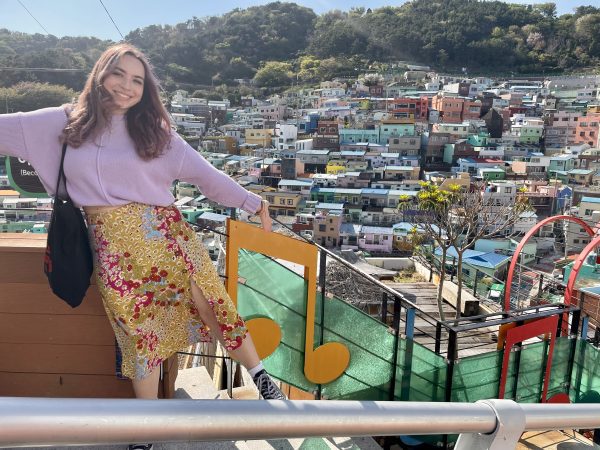
By Gracen Morris, who studied abroad on the CIS Abroad: Semester in Seoul – Sogang University program in Spring 2022.

Why did you choose the location you studied abroad in?
I chose Seoul, South Korea for a number of reasons. South Korea is a very modern country, yet is still connected with its rich culture and traditions. Being able to study in a country and city that was very safe, clean, and full of historical landmarks was at the top of my list, and Seoul, South Korea fit all of them. I also wanted to experience “culture shock”, and get to experience and fully immerse myself in a completely different culture to truly learn and understand a different society.
Describe the city you studied in.
Seoul is one of the most accessible cities in the world so there are multiple ways to get across the city and the country. It’s also very walkable and foreigner-friendly with English listed on almost every street and subway sign. Seoul is a massive city, but each neighborhood is unique and offers a range of foods and things to do. For example, Myeongdong and Insadong are the best places to get souvenirs and traditional gifts. It is easy to feel at home in Seoul, despite its size.
Day-to-day Transportation
Throughout my time in Korea, I mainly used the many subway lines and bus routes in Seoul and other cities. South Korea’s transportation is always reliable, accurate, and most of the time in English. I took every mode of transportation offered and it was all relatively inexpensive with the most being the bullet train costing $40 one way. The best app to have for transportation and personal travel is Naver. It allows you to save locations so you can see them later and provides directions in English for walking, bus routes, and subway routes. This made utilizing public transportation extremely easy and helped me to remember what restaurants I loved and where historical sites were. While Uber is available it was difficult to use and not foreigner friendly. I recommend taking a walk to a taxi stop or hailing one from the road if you want to get one.
Personal Travel
I was able to travel around the country frequently and without spending much money! I experienced most regions of South Korea including the countryside, mountains, and the beach. I chose each city I traveled to based on what I had seen and heard about what each city had to offer as well as its historical significance. Getting to places outside of Seoul was easy and could be planned quickly. To get to each city I either took an Express bus which was around $19, a bullet train, or the subway which is typically $1.17 per ride. For overnight trips, I would book my accommodation through Airbnb, but many hotels offer similarly low prices with most costing under $80.

Food
The most common food is definitely Korean, but in Seoul, you can find just about any type of food in certain neighborhoods. There are always street food stands lining the streets that serve traditional Korean foods such as tteobokki, rice cakes in spicy sauce, and hotteok, a fried pancake with gooey nut filling. There are always places to eat Korean BBQ on every street, and it is typically cheap ($15)! I recommend trying street food and food from open markets like Gwangjang Market to find good local food with an exciting atmosphere. It is also worth it to try chain stores found in the U.S. such as KFC or Baskin-Robbins because they offer different menu items that are fun to try.
Language
The main language spoken is Korean so understanding basic phrases such as “hello”, “thank you”, and “please” in the formal form is helpful. The best app would be Naver’s Papago app which accurately translates between English and Korean and even has a talking feature. At first, the language barrier can seem daunting and it takes some time to get used to, but locals understand that not everyone is fluent. Don’t be afraid to use Korean (even if it may not sound right) because it will make you a better understanding of the language as well as how you view your own native language. It also helps if you have Korean friends or know someone who speaks the language more fluently than you to ask them how to say something or how to talk politely and formally in the correct situations. Don’t be afraid to ask questions!
Differences in Culture
South Korea and the U.S. are culturally very different, and while it can seem overwhelming at first, you learn to appreciate the differences. In Korea, speaking and acting formally and with respect is very important so make sure to familiarize yourself with the proper etiquette. Make sure that you accept things (like money or cards) with both hands or one hand supporting your receiving arm. It is also important to do a slight bow when you thank someone or even enter a small store as a sign of respect and acknowledgment. Taking your shoes off when you enter a room or when you go into a store’s changing room is something that took some getting used to, but it eventually became a habit and now I do the same at home. One thing that was especially hard to adapt to was the fact that there isn’t any personal space, but I realized that it’s just something to get used to. It did take some time to adapt, but asking questions to understand more about customs and also doing it every day really helped!
Locals
Locals in South Korea are some of the nicest people and can be eager to talk in English! While there is a language barrier, translation apps can help alleviate it. I got lost multiple times and still felt comfortable asking locals which way to go.
Luckily, my roommate was Korean so she helped me understand certain things about the culture and language as well as take me around the best food stalls. I was also part of a campus student organization called P.O.E. (Primary Organization for English Speaking) which helped me make friends with both Korean students and other international students. We were able to explore parts of Seoul together and have a great time talking about cultural differences. I’ve found that the best way to make friends with locals during your stay is to just be friendly, open, and talkative.
Events, Festivals & Holidays
While I wasn’t able to experience some festivals due to the pandemic, I did get to go to the Lotus Lantern Festival and Parade in honor of Buddha’s birthday on the last weekend in April and enjoy a parade of lanterns and performers. The week leading up to the festival and into the first week of May is full of cultural events like lantern making and displays at Buddhist temples around Seoul like the famous Seoul Jogyesa Temple. For spring break, I traveled with my friends to Busan and enjoyed walking around the city and beach, and exploring Haedong Yonggungsa Temple and Gamcheon Culture Village. School festival season also occurs in the spring and it’s a great time to see performances and eat great food at your host university or travel to another university and see K-Pop performances! I found that using Pinterest to save places I wanted to go and things I wanted to do was the best way to keep up with my travel itinerary. It is also worth it to experience Gyeongbokung Palace at night on select dates in both the fall and spring.
Culture Shock
The biggest culture shock was definitely the language barrier, but after the first month, I was comfortable with basic phrases so making sure you have some of them memorized helps a lot. Squat toilets are also very common in Korea which I am not used to, but most places with public restrooms such as subways offer both Western toilet options and squat toilets. Another shock was that South Korea doesn’t use Google, instead they use Naver and Kakao. Every form I filled out or directions I found were linked back to these two apps. Keeping an open mind and understanding of differences is the key to making it through! Just be sure to familiarize yourself with some of the cultures before traveling and ask questions.

What type of housing did you live in?
I lived in a dorm on campus during my stay. The room was fully equipt with large windows with an amazing view of the neighborhood skyline, a bathroom, shower, desk, and wardrobe. The bathroom with a toilet and sink was separate from the shower room, but it actually made getting ready with a roommate easier! We also had an area to take off our shoes at the door and store them in a shoe closet. The wardrobe came with an area to hang clothes as well as some drawers. The dorm building housed both Korean and international students with men and women separated along with separate laundry rooms located in the basement. There was also a gym and cafeteria in the residence hall. Roommates were assigned randomly with my roommate being Korean. Luckily, she was an English major so we were able to communicate easily and be friends!
Where was your housing located?
Housing was located on campus so it made getting to class extremely easy with most of my classes being a five-minute walk. It was also just steps away from restaurants, cafes, and the Gyeongui Line Forest which takes you directly into the trendy area of Hongdae. While the university and dorm aren’t located within walking distance of the city center and palaces, the subway line was a block away and takes around 15 to 20 minutes to get into the main city center of Seoul. There is also a bus stop right outside of the dorm’s main entrance that can take you anywhere quickly!

Academic Environment
The academic environment in South Korea is similar to the U.S., but also very different. Most of my classes were given in a lecture format with comprehensive tests during midterms and finals. While I loved my professors and they responded to emails well, there is definitely more formality when it comes to interacting with them. Most of them did not have office hours and also may not know your name even in smaller classes. Testing is also a big deal in Korea with most of my tests given on specialty paper from the university. Compared to UNC Charlotte, there isn’t as much discussion about material, but I still found that I learned a lot and enjoyed all of my classes!
What was the cost of living abroad?
Overall, the cost of living is pretty low in South Korea! You can find good places to eat without breaking the bank and excursions are also low-cost if you budget correctly. Two websites I used to find deals on attractions and activities were Klook and Trazy. These websites offered discounted ticket prices to tours and attractions with most being under $30! When it comes to buying essentials such as towels, lights, or toiletries, Daiso offers a range of options for under $5. Compared to life in Charlotte, Seoul is cheaper and you get more for your money. Going out to eat typically costs under $15 and excursions like going to a market, visiting a museum, or going on a tour are either free or under $5. To make sure I stayed on budget, I didn’t eat out for every meal or ate something cheap (but still good and healthy) from the convenience store like 7/11 or GS25. I also made sure that I didn’t spend more than $1,000 a month.
Communication
An essential app to have in Korea is KakaoTalk. It is easily the most common app and everyone in the country uses it to communicate, especially colleges. I was in multiple KakaoTalk groupchats with my floor’s RA and other students. To be able to communicate both in the country and with my friends and family back home, I purchased a Korean sim card from Trazy and received it in the mail about a week before I left. That way I was able to put it in my phone as soon as I landed. Just make sure to call your cell phone provider to have your phone unlocked before you leave! I also used Whatsapp to text, call, and video chat with my friends and family back home since I couldn’t text them with a Korean phone number.
Packing
I recommend that students have an idea of what the weather’s like in the country they are traveling to. For example, South Korea is freezing in the winter time even through April, so make sure to pack a heavy jacket because it will definitely be used every day. Make sure you take something that might make you a little less homesick like a couple of pictures of friends and family to hang up in your dorm! Leave behind clothes that can’t be layered well in the colder months or clothes that can’t be paired easily, like jumpsuits. This will make it easier to pack basic essentials like shirts and pants that can go well with other clothes. Make sure you pack an adapter and even have some money exchanged before you get to Korea; it helps to alleviate the hassle and price of exchanging at the airport. Leave behind hair tools like a curling iron because they won’t work even with an adapter!

Why did you decide to study abroad?
I decided to study abroad because I wanted to experience an entirely different culture and way of life. Even in high school, I had the goal of studying abroad once I got to college so making sure I did had always been at the top of my list. I wanted to be able to experience how it would feel to live like a local while also being a college student. I realized that
being able to immerse myself in a new culture would allow me to gain different perspectives and gain a deeper understanding of traditions.
What part of your experience made the greatest impact on you?
The part that made the greatest impact on me was getting to interact and make friends with friends from all around the world! I was fortunate enough to make lasting friendships while also experiencing a new culture which allowed me to not only see Korea from my own outsider perspective but to see it from a different point of view. The other part of my experience that made the greatest impact was getting to live like a local. Being able to live in Korea for an entire semester opened my eyes to how different things are done, but also how exciting it can be to experience life from a new point of view.
In your opinion, why should students study abroad?
Students should study abroad to broaden their perspective on the world and people around them as well as gain important skills for the future. Deciding to study abroad is a major decision that comes with a lot of consideration, but also has many benefits. Learning a new language and customs as well as exploring new cultures and traditions helps to better understand and appreciate differences and also gives you a better perspective on your own culture! Studying abroad can also offer a range of opportunities and interests you might not have considered. You can discover more about yourself as well as learn about another culture.