Country Guide: Italy
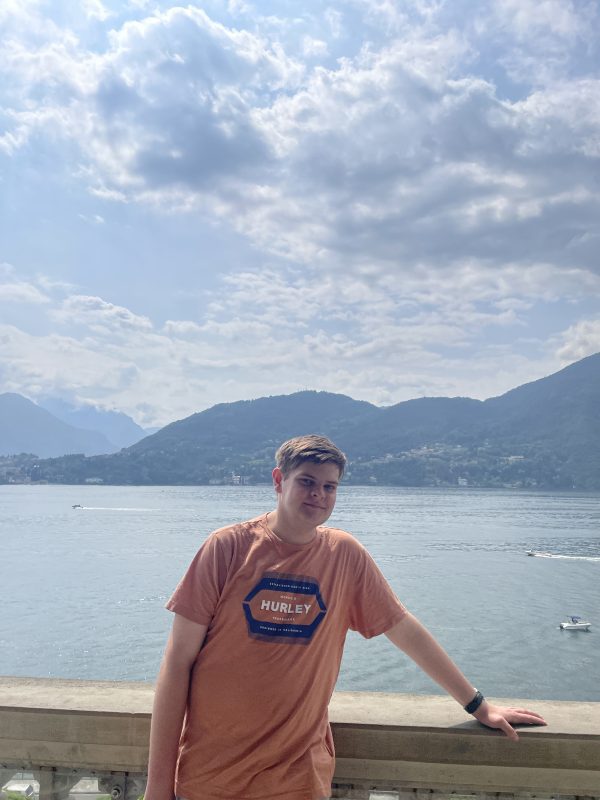
By Benaiah Howell, who studied abroad on the AIFS Abroad in Florence, Italy: Summer program in Summer 2025.

Why did you choose the location you studied abroad in?
Originally, I intended to apply to a faculty-led trip; however, this trip was cancelled. Of the few remaining trips with spots still available, this one seemed the most interesting. The specific reasons that this trip seemed interesting were because of the city’s historical nature and because of the large presence of classical art in the city.
Describe the city you studied in.
Florence is very large, however, most points of interest are in the historical center of the city. The historical center is essentially it’s own city, complete with various districts within the historical center. It is about a 30-45 minute walk from one side to the other, and the student does not need to leave the area. In this sense, Florence has a small city type of feel. During the summer, the weather is quite hot, comparable to the weather in US regions such as Georgia. However, the air conditioning use in the buildings is minimal. Due to the price of electricity, not every building has air conditioning, and if they do, it is likely not nearly as cold as we Americans are used to. The city is very busy with tourists and salespeople, especially given that summer is the busiest tourism month. It is not, however, so busy that it is hard to go places, but you must be careful about people trying to scam you. The historical center is a large attraction due to the age of the city. The city was the center of Renaissance, a major artistic reawakening; as a result, much of the architecture has a very distinctive style. This style involves a lot of embellishments on the buildings that could be described as artistic. Indeed, the movement from which this architecture came from could be considered the birth of classical art.
Day-to-day Transportation
Almost all my travel within the historical center was done on foot. Normal buses cannot service the historical center (the roads are too narrow) and there are only two tram lines in all of Florence, which makes them not that useful except for going to/from the airport or long-distance bus terminal. Taxis were readily available, however, even in the historic city center. Due to the size of the city, however, going from one place to another inside the historical city center is fairly easy and quick, and relatively safe (at least not late at night). Tram and bus tickets are 1.70 for 90 minutes of riding.
Personal Travel
I self-travelled to Rome and Milan, as well as a day trip to Venice. While travelling, I stayed in hostels. Hostels offer very affordable prices for travelers and are not as dangerous/sketchy as they may sound. I travelled via long-distance bus and train. I would recommend train over bus; trains are usually much faster and go to far more convenient places (more centrally located, etc.). The prices are generally comparable for the cheapest tickets, although bus tickets can be a little bit cheaper at times. It was very easy to find tickets using travel apps. Certain regions are certainly more expensive to visit, but nothing was exceptionally expensive.

Food
Italy, including Florence, is known for its food. The program offered meal vouchers, allowing for eating at restaurants most days when I wasn’t travelling. The pizza and pasta are exceptionally good, although you should be mindful of knock-off/cheap places. The Carbonari specifically was amazing. Ristorante Mastro Ciliegia was specifically amazing. It should be noted, however, that a single course (about all one meal voucher covers) is about equivalent to a small American meal. Also, the Gelato (ice cream) is very good, just look for a place that doesn’t appear very touristy.
Language
Almost everybody in Florence speaks both English and Italian, although this is not true of other places you might travel to. Specifically, many smaller destinations that aren’t as touristy might not speak English. Florence (and some other nearby destinations such as Rome) are very touristy and nearly everyone speaks English. Learning some basic Italian can still be helpful as it can help you communicate on a more intimate level. In addition, it will also be useful if you plan to travel extensively.
Differences in Culture
Italian culture is very different than American culture. There are many less taboos in conversation, making Italians come across as very open. They do not intend to come across as pushy, and they don’t necessarily, but they can. Specifically, there could be unwanted romantical advances, which are not viewed as negatively as in American culture.
Another large cultural difference is food. Food plays a very large role in Italian culture; specifacelly, dinner is a social time. It is common to eat late, and long. You will not be expected to leave your dinner table after a specific time, and it is common to eat with friends, sometimes until midnight or later. However, the amount consumed is much less. By American standards, the meals are small, but it is not to hard to get used to the portion size. As an example, when eating dinner, it is considered impolite to have a cappuccino after your meal due to a cappuccino being dense or filling. An espresso, however, is considered fine.
Locals
The locals can be very personal and friendly. We (me and my roommates) befriended a local waiter simply by going to his restaurant multiple times. If you are respectful of Italian culture and people (basically be kind and courteous) then many times people will respond be being friendly. Any attempt to become more familiar with Italian culture ( i.e. try to learn Italian, etc.) will result in further respect from locals. It should be noted, however, that their are many peddlers try to capitalize of the touristry. Some of these people, such as the ones with booths/stalls are nice and can sell fun knicknacks but be watchful of people who to try to scam you.
Events, Festivals & Holidays
During the one month I was there, the only holiday I witnessed was the feast day of the patron saint, San Giovanni (Saint John the Baptist). The festival included fireworks from the iconic bridges, which was a fun event to watch. Also, there is a traditional sport similar to soccer, but with no holds barred (i.e. boxing etc. is allowed). Unfortunately, the tickets for this event are very challenging to secure, and I did not get the opportunity to see this. The program providers were the ones who informed me of this event.
Culture Shock
Over the course of a month, there is not too much culture shock. Whenever I craved something familiar, I would generally find a coffee shop to hang out at all day and study, which is something I enjoy doing state side as well. However, be prepared to be more uncomfortable than you are used to in America. Whether it is the climate control, food portion or size, or the amount of walking, and so on, there will be situations that are not preferable, but this is part of allure of studying abroad. Be willing to try new things as well. In the grand scheme, experiencing something new will be worth the price of some immediate discomfort.

What type of housing did you live in?
I stayed in an apartment. The apartment complex housed a good number of students in the program, but also many residents. It included two double bedrooms, one single bedroom, and three bathrooms. Shared rooms included one dining room/ living room and one kitchen. There was a washing machine, but no drying machines. All my roomates where enrolled in the program and were from around the US. In the kitchen, we had: induction stove, small oven, fridge, some cooking supplies. Also, NO microwave. The kitchen was very small, but usable.
Where was your housing located?
My housing was located very centrally. Most points of interest (museums, etc.) were ten-minute walk, with the very farthest being around 25 minutes. Unfortunately, the train station was farther away (~15-20 min walk) meaning that getting a train to other cities requires planning ahead. The classes were located about ten minutes from my house.

Academic Environment
I took two classes: an Italian class and a drawing class. The drawing class was very relaxed. The teacher took us around to different locations, and we just drew significant things (architecture, statues, gardens, etc.). There was a good deal of time spent in the classroom, however. This class was very enjoyable.
In the Italian class, the teacher spent a lot of time speaking in Italian, even though none of us students could understand her. Overall, I found her teaching style more stressful and less helpful. All classes were lectures, possibly with field trips, with some style of test or project. Some classes had homework while others did not.
What was the cost of living abroad?
The cost of living was higher than I was used to but was not unbearable. Groceries, however, were an exception: food from the local supermarket (Conad) was surprisingly cheap. The same cannot be said of restaurants, which surprised me in their price. By being frugal and using the deals given by the affiliate provider, I could get by using relatively little money; however, still be prepared with some spending money, even for gifts and mementos.
Communication
As I was travelling on my own before and after the trip, I opted to get a temporary SIM card. This allowed me to use the internet when not connected directly to wifi, which turned out to be super helpful. I probably could have survived the study abroad trip without doing so, and many of my classmates did just that. I do highly suggest getting a temporary SIM if you are doing extended solo travelling.
Some very helpful apps I used included Moovit, which let me locate and track public transport, and Omio, which let me book trains between cities. These two apps made travel much, much easier, and I cannot recommend enough how useful they were.
Packing
I packed very minimally and needed to wash my clothes very often: I only had one small bookbag and one backpacking backpack. While I survived, it was not ideal. If I could do it again, I would take a real suitcase so that I could bring more change of clothes. Honestly, all you need to bring is a week’s worth of clothes (or four days’ worth if you did what I did), basic toiletries, some books/journals/drawing, etc. if you want to, computer, and charging implements. Anything else should strongly be considered beforehand, as you will find that you will probably rarely use it. It should be noted that American cash is not very useful, it should be left behind. Euros, on the other hand, are very useful for taxis, etc.

Why did you decide to study abroad?
I decided to study abroad because I wanted to experience the broaden my experience of the world. I always wanted to travel, and this opportunity let me get my feet wet and learn how to travel. However, even on it’s own, this trip was a blast. I was already trying to pick up drawing, and visiting the birthplace of fine art and taking a drawing class was rewarding.
What part of your experience made the greatest impact on you?
Observing all the old, fine art was very rewarding. It was inspiring to see all that old beauty, whether it was statues, buildings, or paintings. I feel that by studying this art, I feel wizened and more at peace with myself and the world. Something about them made me feel, well, enlightened. They were the most rewarding thing I saw and had the strongest impact on me.
In your opinion, why should students study abroad?
Any student interested in experiencing more of the world should consider studying abroad. Studying abroad can help you understand humanity, or something that humanity produces, such as art. Studying abroad grants you experience that cannot be gained in a classroom, or even in the states. It allows you to see more of the world in a way that will change you. It helps you to be more mature and understanding. Studying abroad helps you to grow as a person in addition to all the fun experiences you will have.