Country Guide: Japan
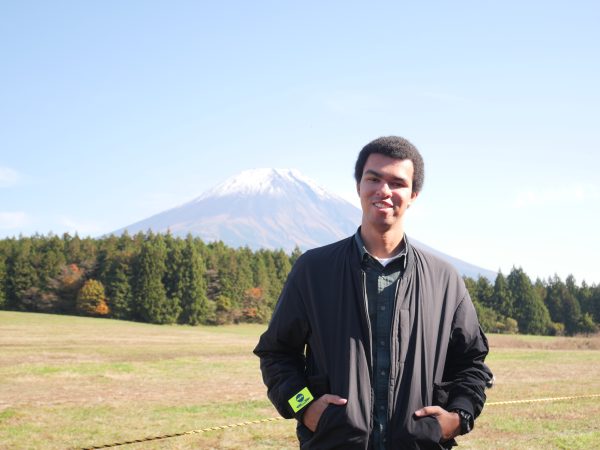
By Dylan Harris, who studied abroad on the UNC Charlotte Exchange: Nagoya University of Foreign Studies program in Fall 2025.

Why did you choose the location you studied abroad in?
I chose the location because it was not a major tourist destination, so it would allow me more opportunity to immerse in Japanese. I also chose it because the location allows for easy access to other parts of the country, and the university itself stuck out to me with its class offerings, student organizations, the scholarship it provided, and overall atmosphere. I also learned from someone who had studied there before that I would have the chance to go on school excursions and take a class on Japanese traditional performing arts. The dorm options were also really good, and I heard that there were good food options nearby, and a church community I could get involved in nearby to the school.
Describe the city you studied in.
Nagoya University of Foreign Studies itself is in Nisshin city, something kind of like the suburbs of Nagoya. From the university there were several restaurants, convenience stores, and supermarkets within walking distance of the dorms. It is a fairly laid back area, and while there are some busier roads, walking is always comfortable (with the option for public buses for transport). Weather in summer (especially August) is very hot and humid, but it was mostly sunny (though a typhoon did pass by once).
Nagoya city itself is about 45 minutes to an hour away via buses and train. Sakae and Osu were two areas I enjoyed within the main city. Sakae is the more energetic area where young people hang out, and Osu is a shopping district with shopping streets and shops of all sorts. Nagoya is quite a large city, being the 4th largest in Japan, but it is not a major tourist destination. To some it may feel boring compared to someplace like Tokyo, but there’s plenty to do and it’s fun to explore.
Day-to-day Transportation
From my dorm, Global Village, the university was a 3–5-minute walk away. To get to the city center, you can take either university bus to one of the stations on the main subway line. That line will then take you to the city center. You could also take a public transport bus to the start of the line and continue into the city from there as well. Walking is a very common thing, and you can walk to just about anything you might need from the university (depending on how much you want to walk) or around Nagoya city properly. Uber is available (as well as food delivery and amazon). Transportation is very easy to utilize, as you can learn which buses and trains to take via Google maps and you can easily pay for transportation with a rechargeable IC card (available at train stations and airports). Transportation was relatively inexpensive, but it depends on how much of it you do, as with anything it can add up. I heavily relied on Google Maps, and I did not have any issues navigating this area.
Personal Travel
I only organized a day trip once myself, and we went to Gifu City, because I wanted to see Gifu Castle because of its historical significance with relation to the great unifiers of Japan (namely Oda Nobunaga). It was very easy to get there as all we had to do was take a bus near to the dorm, get on the Higashiyama subway line to Nagoya Station, and then take a JR line to Gifu City from there. From Gifu Station we took a public bus to the castle (all navigated with Google Maps). We did not have to book anything for this trip, and cost of travel was probably around 2000 yen. I did travel after my semester ended with my family, and we booked hotels through booking.com, but I heard my friends used Agoda. My family and I stayed in budget hotels, but I also have spent the night out in Nagoya at an internet café, so there are a variety of options. I wanted to travel to Ishikawa prefecture, and I was planning on staying in a hostel, but unfortunately I ran out of time. From Nagoya, shinkansens can take you to major stations on the line, but to get to most other places, a day express bus or night bus are the main method.

Food
Describing food in Japan would take years, but one of the things Nagoya is known for is Miso Katsu (and there is a place really close to the Global Village dorm). Miso in general is famous in the Nagoya/ Tokai region, but there are also a variety of other things. Hitsumabushi/ eel and chicken wings are a couple other things I heard were famous in Nagoya. In addition to that, there were sushi, gyudon, ramen, and udon restaurants nearby the university among many other cafes and supermarkets selling bentos. The area around the university also has a variety of cafes. Nagoya University of Foreign Studies also has a few food halls with great meal options for cheap. For affordable and safe meals, I definitely recommend the Sukiya and Saizeriya chains. Umaya near the university probably has my favorite ramen, and Hamazushi and Sushiro are popular conveyor belt sushi chains. But Japan is a country known for its food, so I also recommend just going out and exploring. If you do have gluten and dairy dietary restrictions (not celiac), my mom was able to eat the salad’s at Sukiya without much or any trouble, but outside of a few things here and there (mainly salads), it was a challenge to find things she could eat to get a hearty meal because of soy sauce and her dislike of seafood.
Language
The primary language is Japanese, especially in the area surrounding the university. You will not find many people other than students and professors who can speak English. I am studying Japanese, so while I didn’t understand everything, I was able to grow accustomed to learning and using daily phrases. For more complicated things, I would rely on the support of dorm RA’s or Japanese friends and buddies provided by the school for assistance. In a pinch, google translate can be helpful (especially for scanning signs or product information). I highly recommend learning at least some basic phrases and being familiar with how some social interaction scenarios work in Japan before going to Japan, like phrases for checking out at a convenience store.
Differences in Culture
Japan is very different, it’s hard to know where to begin. In terms of daily living, Japan’s trash sorting culture was definitely something that took a while to get used to. I used ChatGPT and asked my RA’s for more specific questions with regards to sorting, but other things were fairly simple in the dorms. Being conscious of other people and not causing trouble for others is something that I really felt like I had to do while in Japan, but while I think it’s important, it’s not good to let that control you to the point of discomfort either (since you can never be Japanese as a foreigner). Another big cultural difference is indirectness and putting on a front of politeness, something I am not as keen on, but I understand it as a societal way of keeping peace. I appreciate the order of Japanese society in the sense that things work (transport etc.) and I also appreciated aspects of the respect culture. I mainly adapted by paying as much attention and observing my surroundings as much as I could. For example, I figured out how to behave on public transport by observing other passengers.
Locals
I didn’t interact with people outside of the University too much other than staff at restaurants and stores, but I think that the people in Nisshin, Nagakute, and Nagoya more generally are laid back compared to Tokyo, and there were moments when I experienced a lot of kindness from Japanese people here. I befriended a couple students at university through repeatedly being present, and the buddy system provided by the school. I also met some people through classes and school events. It really takes time and active effort on your part to connect with Japanese people, in my experience. The school also had interactive events between international students and Japanese students, like a day trip to Nara to do a photo scavenger hunt or a pumpkin hunt at the campus.
Events, Festivals & Holidays
The university hosted a school festival which I recommend attending for a club showcase and wide variety of booths and food stands. When we first arrived in August, there was the Nisshin City Yume Matsuri (Dream Festival), which was a great event, though we just went for the fireworks. There are occasionally different events in Nagoya city, though I never went to one. Unfortunately, I never had a break during my semester. That said, when traveling around Japan with my family in December after the semester, we went to the Fire Prevention Festival held on December 31st on Miyajima Island in Hiroshima. That was pretty interesting, and Miyajima is famous for being home to one of the 3 great views of Japan.
Culture Shock
One of the biggest things was just overcoming the language barrier and having to come to terms with the fact that I couldn’t understand everything in my daily life. I don’t think I ever got over it, but it definitely inspired me to improve, and I got more comfortable with everyday phrases by the end of my time there through practice and immersion. I don’t know if it’s culture shock, but I always felt different in Japanese society, and while it wasn’t usually a big deal, it was something I felt more profoundly when feeling homesick. I coped with it by talking to my parents and spending time with friends in my dorm or from the church nearby. It took me a while to adjust to food, and food portions never satisfied me for long, so I eventually dealt with that by just ordering more food when I knew I needed it.

What type of housing did you live in?
I lived in a dorm. Nagoya University has 3 dorm options, and I applied for Global Village because of the set up of the dorm and the social aspect of it (and because I had a friend living there already). Dorms are the only option for Nagoya University of Foreign Studies, but the one I was in was really great. It was very close to campus, and I had my own room and bathroom. Each floor has a kitchen divided into sections of a few rooms per section. It was equipped with a mini oven-toaster, induction heaters, sinks, and some dishes left behind by other students. It is up to you to buy your own cleaning supplies and other things that you may need or want. Rooms have a bed (and you can rent bedding), desk, shelves, closet, and a balcony. Bathrooms have a tub/shower, toilet, and sink with a mirror. On the first floor is a large common room.
Where was your housing located?
Dorms were within very short walking distance from university campus, usually 3-5 minutes from mine. Using public transportation (bus or train), it takes about 45 minutes to an hour to get to the city center. To get to Nagoya city, you first take a public bus or a bus run by the university to a train station. The school buses go to Kamiyashiro station, which is slightly closer to Nagoya city than Fujigaoka, where the public bus goes.

Academic Environment
Classes are structured very differently to classes at UNC Charlotte. My Japanese class was semi-intensive, but we met for 6 hours a week, and class was interactive and conducted entirely in Japanese. There was a lot more speaking/conversing, answering questions, paper writing, and presenting than at UNC Charlotte. For my culture classes, there were almost no assignments for the whole semester until the end. Then they had presentations and final exams (both being major contributors to the grade). Attendance mattered for every class, but in terms of grades it contributes the least. My favorite and least favorite class was probably my Japanese class, because it was challenging, but my teachers and classmates were great, and I learned a lot! Interacting with the Japanese teachers is preferably solely through the use of Japanese at intermediate levels and above, and I also had a different teacher for each day of class. Culture classes were taught in English and occurred once a week.
The class selection process is a bit of a lottery system, which means you should definitely consider multiple options and you probably won’t get everything you want, but there is a chance to get classes during the add/drop period. In Japanese class you get your paper tests and quizzes handed back to you (except exams), but you are not told your total grade (unless you ask for it). You kind of have to keep track of your grades yourself in other classes. You may be able to see your exam scores or go to the professor’s office to discuss them, but I never learned what I got for my presentations. I also really liked my class on Japan’s geography and the traditional performing arts class.
What was the cost of living abroad?
Most things in Japan are much cheaper than in Charlotte. I would say the cost of living is about half, and if you get the scholarship from the school, your rent will be covered with a bit of a bonus for spending/food money as well. It is arguably cheaper to cook for yourself, but for the most part I ate out for my lunches and dinners without it feeling like I was losing too much money. I limited my meal cost to an average cost and kept that up for most of my time there. I didn’t eat fancy or try too many things often but just ate at the restaurants and chains around the dorm. For budgeting, I kind of did it mentally, since I am naturally not a big spender. There are going to be greater costs when you first get there because you’re setting up, but once I got into a routine, I would withdraw an amount of cash I would be okay with spending for that month, and would manage that accordingly (occasionally with some adjustments). There are student discounts at some places, like purchasing a student ticket for museums or the movie theater, but I didn’t take advantage of too many. There is a student discount provided by the school for the bullet train, but I don’t know how the process works personally.
Communication
When I first got there, I used my US provider’s international plan until I could get one in Japan. Nagoya University of Foreign Studies has a cellular company they partner with that provides phone plans to international students, which I purchased for the duration of my stay. The dorms have Wi-Fi, and so does the school, though I had trouble connecting my phone specifically (other devices and phones of friends worked fine). I did not purchase a phone abroad myself, but I was with a friend when he did, and the process is as simple as asking for one at a BOOKOFF and paying for it there. The school does have discounts for traveling by bullet train, but if you don’t want to use that (which involves going to the station and doing all the purchasing and getting the discount in person), I used SmartEX without any issues after the semester for my family. Many restaurants and stores have associated apps, and those can be useful or fun for getting discounts. Tenki.jp is a good weather app. Navitime has an app, but I mainly used the website in addition to Google Maps for general travel. For shopping and understanding the language, I used Akebi (dictionary), Google Translate, and Payke.
Packing
The packing question is hard because everyone is different and has different wants and needs when it comes to studying abroad. I would definitely take a file with copies of your flight itinerary, acceptance letter, COE, and any other important documents you accumulate through the process. You may not be asked to show anything extra, but it’s a good just in case measure. I would recommend bringing one or two things of your favorite toothpaste and maybe any particular products you use that aren’t available in Japan, but unless it’s something you really want, Japan has just about anything you might need, so there isn’t a need to stock up on those kinds of things. I also brought a travel sized bottle of acetaminophen, Pepto Bismol, Band-Aids, and cough drops because I did not want to deal with finding equivalents over in Japan, but they do exist and so there isn’t a need to do that. That said, Japan is very strict with medication, so do not bring major quantities or anything with ingredients not legal in the country. I went in August, for the fall semester, and it is incredibly hot, so lighter clothing is ideal, though shorts aren’t that common in Japan. I brought some books and things over with me, but honestly didn’t have time for them, so I would recommend not bringing anything over for entertainment, or that’s heavy or takes up space unless you can guarantee you’ll benefit from having it, especially if you want to shop a lot in Japan.

Why did you decide to study abroad?
I decided to study abroad because I knew UNC Charlotte alone would not be enough to give me the real-world experience I needed to improve in Japanese. I wanted to go to Japan to meet Japanese people and experience the culture firsthand. I also knew that it would be a good chance to get a feel for living in Japan to know if I would want to live there in the future or not. Studying abroad fit in my schedule and I knew that it would let me go to a country that has shaped and influenced my current academic path and personal interests tremendously.
What part of your experience made the greatest impact on you?
The school excursions were a blast, especially the overnight trip we had during my semester there. It made such a great impact because of all the time I could spend exploring Japanese culture with my international friends. But on a personal growth note, my time in Japan made me more comfortable with everyday interactions, not only in Japan but upon my return to. I had never checked into a hotel before, but in Japan after the semester, I was guiding my family around and I had to do that and many other things that pushed me out of my comfort zone. I learned that I could guide people around and interact in Japanese more than I had previously thought, as I had often relied on other more knowledgeable students.
In your opinion, why should students study abroad?
Even if you have been abroad before for vacation, going to study abroad allows you to really get a feel for life in another country, and every day experiences tourists miss. Furthermore, if you haven’t left the country before, it can really broaden your horizons and world view (it can if you have been abroad before too). You get to experience a new culture, school system, and discover things about yourself that you didn’t realize before. It is an opportunity to make friends both locally and with people from all over the world. It isn’t always easy, but the challenges and experiences really help you grow. And if you’re learning a language and interested in the culture, going there is the only way to really get a better understanding, as a classroom can only do so much.